Kindergarten Readiness Checklist: A Guide for Early Learners
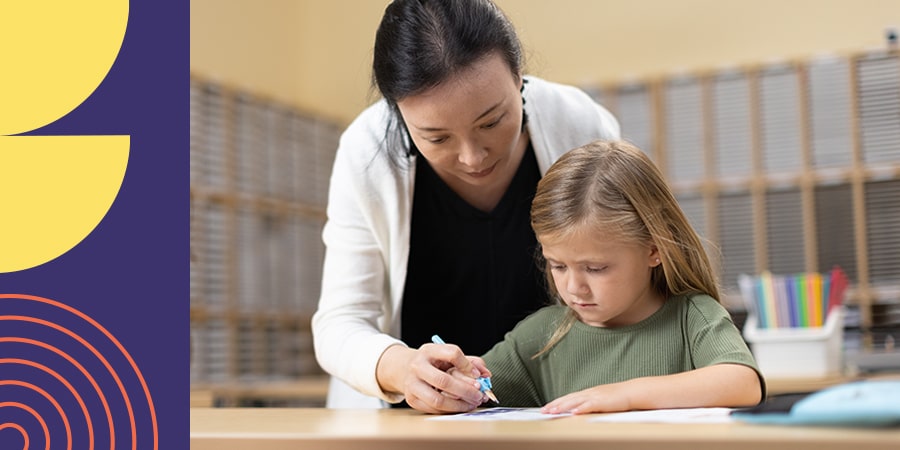
How often do you look at your preschooler and wonder, “Are they ready for kindergarten? How will I know?” Kindergarten readiness entails more than knowing ABCs, counting to 20 and recognizing basic colors. This Kindergarten Readiness Checklist will detail what your child needs to know and provide insight on why.
From the day a child is born, parents are naturally attuned to milestone moments and watch for their children to achieve them. So, it’s not surprising that parents are eager to know what milestones their preschoolers should reach before they enter kindergarten. Providing a child with a strong foundation before they start kindergarten can help them be more successful in school. This Kindergarten Readiness Checklist is intended to help you evaluate your child’s readiness and to know what they still need to master before they make the exciting transition to school.
What should a 5-year-old know before kindergarten?
- Academic Skills
- Cognitive Skills
- Reading Skills
- Math Skills
- Gross Motor Skills
- Fine Motor Skills
- Writing Skills
- Self-Care Skills
- Social Skills
What are the most important skills for kindergarten readiness?
Following are examples of the skills needed in each of these major skills groups:
Academic Skills:
Children who start kindergarten with some of the basics in math and reading, like the ability to count and recognize letters of the alphabet, will have a head start in their first year in a structured learning environment. With Kumon, early learners master one concept at a time before moving forward, which allows them to move as slowly as they need to fully grasp a concept or, if they progress quickly, to enter school with advanced skills such as addition.
Cognitive Skills:
Children must be able to sit still and listen before they enter kindergarten. Although a kindergarten classroom may seem like controlled chaos to a visitor, kindergarten is becoming much more structured. Developing a longer attention span and the ability to work independently are important skills that will serve them well in the classroom. Longer attention spans may be fostered by gradually improving concentration skills and encouraging young students to try to complete their work without waiting for a teacher’s help.
Reading Skills:
Children entering kindergarten are at an advantage if they are able to recognize letters, sounds and easy sight words. Before children can learn to read, they need to lay the groundwork with pre-reading skills. Examples of pre-reading skills are correlating words with familiar objects, expanding vocabulary to develop phonemic awareness (recognition of different sounds that make up a word) and recognizing rhyming words.
Math Skills:
Some children will be challenged by math in school. So, children will start off on the right foot if they come into kindergarten with some of the fundamentals like being able to recognize numbers up to 10, count to 10, recognize numbers out of order up to 10, recognize basic shapes and understand the difference between “more than” and “less than.”
Gross Motor Skills:
Kindergartners are active on the playground! Most 5-year-olds should be able to run, gallop, skip, hop on one or both feet, leap, push and pull, climb, and roll, throw, catch, kick and dribble a ball.
Fine Motor Skills:
Children should be able to manipulate small objects like pencils, scissors and eating utensils before kindergarten. Students need to practice the correct way to hold a pencil and how much pressure to apply when writing and tracing shapes and numbers.
Writing Skills:
Writing is a fine motor skill that often takes longer to develop than learning to read. Children will have success if they can hold a pencil and trace their name before kindergarten. You can help by giving them a pencil (or tablet stylus) that is an appropriate size for little hands. The triangular-shaped Kumon 6B pencil, which is given to students when first learning to write, is both wider and shorter than a traditional pencil. By comparison, a standard No. 2 pencil would be extremely difficult for a young child to use correctly at first.
Self-Care Skills:
Before going to kindergarten, children must be able to dress themselves and not need help in the bathroom. They should be able to lace and tie their shoes if they wear sneakers with laces and fasten a belt if their pants need a belt (or the school dress code requires one).
Social Skills:
Children must understand how to take turns and respect a friend’s space, whether on the playground or in a classroom. They need to know how to follow directions and sit quietly in a classroom setting. They should be equipped with basic manners, saying “please” and “thank you.” Children should be able to express and manage their feelings, make friends, show kindness to others and calm themselves down when they’re upset.

Don’t wait to explore quality pre-kindergarten programs!
Ensure your child is ready with Kumon’s early learner program.
Answering Parents’ Questions
We hear a lot of concern from parents who wonder when their pre-kindergarten children should be meeting certain milestones. Here are some common questions and answers:
What should my child already know before kindergarten?
At minimum, children should know their name and be able to write it or trace it. They should be able to go to the bathroom by themselves. They should recognize most letters, if not all, and be able to count to 10.
At what age can kids write their name?
Most children are developmentally ready to write their names around age 4 or 5, depending on fine motor skills and a variety of other factors – including the child’s name, how long it is and how complicated the specific letters are.
How many letters should a beginning kindergartner know?
By the time they enter kindergarten, children should know some letters and the sounds they make.
What level of reading is kindergarten?
Kindergartners are just beginning to read. Some may start with guided reading and others may already be able to read simple sentences. The goal is to end the year reading.
Should my 5-year-old be reading before kindergarten?
Not necessarily, but they do need to be ready to start reading. They should recognize letters and know the sounds they make.
How do I mentally prepare my child for kindergarten?
Like any other new experience, be open to questions from your child and offer positive answers to help them get excited. You might look for a fun book (or several – there are many!) about starting school or kindergarten to read frequently in the weeks or months leading up to when school begins.
How long does it take a 5-year-old to adjust to kindergarten?
This depends entirely on the child. However, more sociable children who have attended preschool or spent time with other kids their age may adjust more quickly.
What if my 5-year-old is not ready for kindergarten?
You can always hold him or her back for a year, but it would probably be easier for the child to simply start now to prepare by sending him or her to a good preschool or program focused on skills development.
Is it normal for kids to struggle in kindergarten?
Again, this depends on the individual child. Kindergarten should be fun, but it is a big transition and there are certain things that children are expected to learn during that year. The best way to prepare is to have them ready to learn.
How many kids can read before kindergarten?
Only 2% of children are able to read simple sight words at the beginning of kindergarten, according to a U.S. Department of Education study1 of kindergarten students. About 1% are able to read more complex words in sentences.
Is my child emotionally ready for kindergarten?
You are probably the only person who would know that. The best way to emotionally prepare children for kindergarten is to make sure they play or socialize with other children their age beforehand.
What should kindergarten parents know?
Before children start kindergarten, parents should make an effort to meet the teacher and find out what kind of daily or weekly communication or assignments the teacher may be sending home. They should ask about transportation (for instance, the bus schedule if the child will ride a bus), lunch, recess, policies about absences and the dress code.
In what order should parents teach sight words in kindergarten?
Your child’s teacher may send home a list of words to work on every week. You can also check out some of the resources available through our related blog article.
What are the three-letter sight words for kindergarten?
Kindergartners start to read by learning common, short words that are easy to sound out, such as “and,” “cat” and “dog.” Take your cues from the sight word list that your child’s teacher sends home.
Preparing to send your children to kindergarten is an exciting time. Don’t let anxiety ruin that time for you or your child. Instead, take simple steps to make sure they are ready. Enroll them today in a quality program tailored for early learners and kindergarten readiness.