Self-Learning: A Guide to Success in School and Beyond
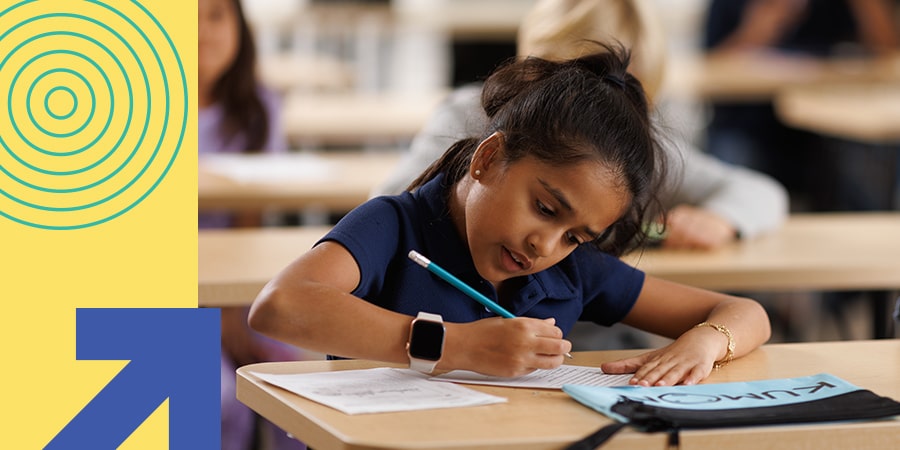
You may have heard Kumon develops independent self-learners. But do you know what we mean when we talk about self-learning? Self-learning is the ability to gather, process and retain new knowledge without the aid of a teacher – and it’s an extremely valuable skill.
Independent learning is essential for students who aim to excel. Self-learners are extremely engaged in their education and enjoy learning new things. Self-learners want to go beyond what they’re learning in class and from a textbook because they have a deep desire to learn more. Self-learners are less likely to fall behind due to school closures or having a difficult-to-understand professor in college, because they have developed the confidence and ability to figure things out on their own.
However, many people shy away from trying to learn new skills or concepts. Without the confidence to try new things, and the understanding that it’s OK to fail, students may avoid trying to learn concepts out of their comfort zone because they are afraid of a negative outcome.
- What is Self-Learning?
- Why is Self-Learning Important?
- The Process of Self-Learning
- How to Help Your Child Become a Self-Learner
- Benefits of Independent Learning
What is Self-Learning?
Self-learning is the process of understanding by using guides and resources. Self-learners are likely to set goals and then develop learning strategies to meet those learning goals.
The most common learning style presented in a school environment is passive learning. A teacher presents material while students take notes and ask questions.
Students who self-learn, on the other hand, essentially guide themselves. Instead of having a concept explained to them, they use written instructions, context clues and examples to figure out answers on their own. When a student develops the ability to self-learn, they can study any subject confidently whenever they need or want to learn it rather than waiting for someone to teach them.
Kumon Instructors are trained to guide their students to become self-learners by careful observation. Along the way, they reinforce the students’ development by both celebrating their progress and encouraging them to challenge themselves. Instructors ask questions that prompt students to study the processes and solutions to problems. Self-learning can also be learned and reinforced at home.
Why is Self-Learning Important?
It’s important for children to develop the ability to self-learn so they will understand how to guide themselves and possess a more active role in the learning process. They also will be capable of learning more without depending on an Instructor or a tutor to explain new material. That will help to set the child up for success in high school, college – and even the work force. An employee who can easily learn to do new things or solve problems on their own is a valuable asset to an organization.
A self-learner is likely to:
- be willing to try new problems on their own.
- be more resilient with challenging material.
- make deeper connections between exercises, topics and other subjects.
- be unafraid of making mistakes and understand they will learn from the attempt.
With self-learning, the objective is to increase a student’s confidence as well as their competence. A self-learner not only tends to learn new skills more quickly, but they also believe that they can learn even more. That’s because they have proven to themselves that they can do it through prior learning experiences. That confidence, coupled with a greater enjoyment of learning, allows them to try new things without being afraid of failure. That’s why self-learners often excel academically.

Encourage your child to become a self-learner by enrolling them in the Kumon Program.
The Process of Self-Learning
Self-learning can be a process with four distinct stages:
- being ready to learn
- goal setting
- engaging in learning (through research, practice, etc.)
- evaluating what was learned
Ready to Learn
In the first stage, a self-learner is open to learning new things. That readiness stems from the confidence of a self-learner, and it is reinforced by being in a supportive learning environment. Self-learners thrive when failures are treated as learning opportunities rather than being frowned upon.
Goal Setting
In the second stage, a self-learner sets goals for him- or herself on what they would like to learn. This is an important life lesson because it teaches a student to challenge himself and to learn what it takes to reach a goal.
Engaging in Learning
The third stage is where the magic happens. Self-learners are extremely engaged in their education, and to learn something new, they likely will have to do research, process information, connect new information with concepts they already know and put the new skill into practice. How they process that information and practice a skill may depend on their individual learning style, whether it’s auditory, visual, reading/writing or hands-on.
Evaluating
And finally, the self-learner must evaluate what they learned. Evaluation is an important step because it may confirm for the student that they solved a problem correctly or help them identify what they did wrong so they can correct it on their next attempt.
Self-learners have several common qualities. They are self-aware, cognizant of their own learning styles and confident in their abilities. They are comfortable working alone and are self-motivated to learn something new.
How to Help Your Child Become a Self-Learner
You can help your child become a self-learner by encouraging them to try to figure something out for themselves rather than doing it for them.
Even preschoolers can be encouraged to become self-learners. When they are stuck, parents can point them in the right direction and encourage them to try to do something for themselves. And instead of focusing on the end result, parents could praise the child’s efforts to boost their confidence.
Young children also are likely to emulate their parents. If they see their mother reading a book every evening, they are more likely to adopt that valuable habit.
There are multiple strategies you can use to help a child to become a self-learner, such as giving them some space, starting a journal, asking “what’s new,” seeking vocabulary clues and focusing on the effort.
Give Them Space
Allow children to do their homework in the same room with you but not necessarily right beside you. Otherwise, they will constantly be looking to you for validation that they are doing something correctly. Give them the space to try on their own before you review their work.
Start a Journal
You can encourage children of all ages to read literature and to keep a journal with new words they learn. You could also suggest that they tackle a more difficult science project, and when it’s over, ask what they learned from it and how they would take it a step further if they did the same project again. That could be another valuable entry in their journal.
Ask What’s New
For a child studying math, draw their attention to examples and explanations that introduce a new topic or variation and require extra attention. Ask, “What’s new or different from what you were just learning?” You may also want to ask your child to explain the problem to you. Often that can help them recognize mistakes.
Seek Vocabulary Clues
If a child is struggling with a reading passage, suggest that they reread the exercise or instructions. You may want to refer them to earlier examples or vocabulary, if applicable. Then, ask them to reread the passage out loud. Help them to infer the meaning of a difficult word by looking at the root word, the context or by using the dictionary. Another helpful hint is to have students connect to any illustrations on the page.
Focus on the Effort
If your child doesn’t get the correct answer right away, praise their effort to encourage them. Avoid explaining the solution too quickly, however, as it could deter them from trying again.
For something that sparks the brain differently, you could recommend the child try their hand at cooking by following a recipe or watching a video. Older children may also enjoy trying to do puzzles, like crossword or Sudoku; a competitive child may enjoy trying to beat their fastest completion time (or their parent’s).
Benefits of Independent Learning
There are many benefits of being an independent self-learner, chief among them that self-learners tend to perform extremely well academically. That may be because they can teach themselves material that puts them ahead of their classmates, but it also may stem from the fact that they genuinely enjoy learning.
Self-learners are confident, self-aware and self-motivated. They recognize their own strengths and how to leverage them; they know their weaknesses and how to overcome them. They know what type of learning style works best for them and they can use those strategies to keep moving forward. For instance, a student who is a reading/writing preference learner would know that to better absorb the information from a lecture, they should take notes and read over them later.
Because they understand what learning strategies work best for them, being motivated to learn more and able to teach themselves, children who master self-learning will have a lifelong advantage over their classmates and colleagues.
Parents can set their children on the right path by giving them the tools and encouragement they need to become independent self-learners. Enroll them today in a learning center that encourages self-learning, and reinforce what they’re learning in that environment at home.