8 Ways to Have a Great School Year
It’s that exciting time of year again when summer vacation draws to a close and a new school year emerges. A new school year equals a fresh start. And who doesn’t need a fresh start this year? While this school year brings a lot of uncertainty to parents, teachers, and children, one thing we do know for sure is that the start of the school year marks a new chapter for students. Whether your child will be attending in-person classes, participating in online learning, joining a learning pod, or a combination of the three, creating a plan and routine will set your child up for a bright and successful school year.
Here are eight ways to help make this the best school year ever.
1. Plan Healthy Lunches
A nutritious lunch can act as brain fuel for your child during the school day. You can plan out a weekly or monthly meal schedule. You can also simply compile a list of options by food groups, so you can pick and choose as you go. Prepare healthy and delicious lunches you know that your kids will love. Mix up the boring turkey sandwich with some of these easy to follow celebrity chef-inspired recipes.
2. Family Dinners
Weekday dinners are a great opportunity for the family to gather around the table and catch up on each other’s day. Make these dinners a routine and have your children share what they learned at school that day—whether their class was virtual or in person. To save time in the kitchen, plan your meals out for the week by prepping your food on Sundays. Here are some nutritious, family-friendly meals that will make weekday dinners a breeze and will give you more time to spend at the table.
3. Dress for Success
While it might be tempting for your little one to stay in their pajamas all day if they are learning from home, dressing up in a school outfit will help them feel awake and ready to take on the day’s lessons. Set your child up with a selection of outfits that can be rotated throughout the week. Your child will be looking sharp, feeling smart and well on their way to having a great school year!
4. Set up a Sleep Routine
One of the biggest challenges can be the sharp shift from a lazy summer to a busy fall. It’s very important to have your kids on a good sleep schedule. A sleep routine can be particularly helpful for students who are starting the school year from home, as it can help them get in the right mindset for school. You can start establishing your child’s new sleep routine at least two weeks before the start of the school year for a smoother transition. According to the Sleep Foundation, children who don’t get enough sleep can have a difficult time learning. It’s recommended that kids between ages six through 13 get nine to 11 hours of sleep each night.
5. Get to Know your Teachers
Keep an open line of communication with your child’s teacher. One of the most important aspects of any parent-teacher-child relationship is the establishment of regular communication. Try to meet with the teacher for a few minutes as soon as the school year begins by phone or a virtual meeting. It’s good to build rapport and know the new expectations. Building a relationship with your child’s teacher can help you understand how your child is doing and how you can better support their learning at home. This will strengthen your relationship by developing healthy homework habits from the start, which will in turn help your children have a successful school year.
6. Create a Distraction-free Learning Area
To help ease into the transition of virtual learning at home, designate an area in your home for your child to work in. This space should be free of distractions to help maintain their focus. Toys and the television should be put away or turned off. Supplies such as pencils and erasers should be within arm’s reach.
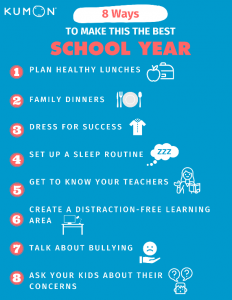
7. Talk About Bullying
Research shows that one in three kids in 30 countries have been a victim of cyber bullying. With online learning, there are potentially even more opportunities for bullying. Talk to your children about how to recognize bullying. For example, do they know the difference between teasing and bullying? Talk about some of the things they can do to handle different types of situations. Make sure they know the right way to treat their peers so that they don’t find themselves heading down that path.
8. Ask your Kids about their Concerns
Make sure you take some time to discuss what your kids are looking forward to and worried about this year. Going back to school can bring up mixed emotions, and anxiety can manifest in numerous ways; from nightmares and difficulty sleeping to “tummy aches” or a sudden renewed interest in a security blanket. Sometimes just talking about it can help alleviate some of the stress.
Discover even more study tips and resources that can help advance your children’s ability in math and reading.